february, 2019
Event Details
Processes that occur in post-subduction environments - magmatism, exhumation, rapid uplift, and subsidence - remain poorly understood. The relationship between what is observed at the surface and what is happening
more
Event Details
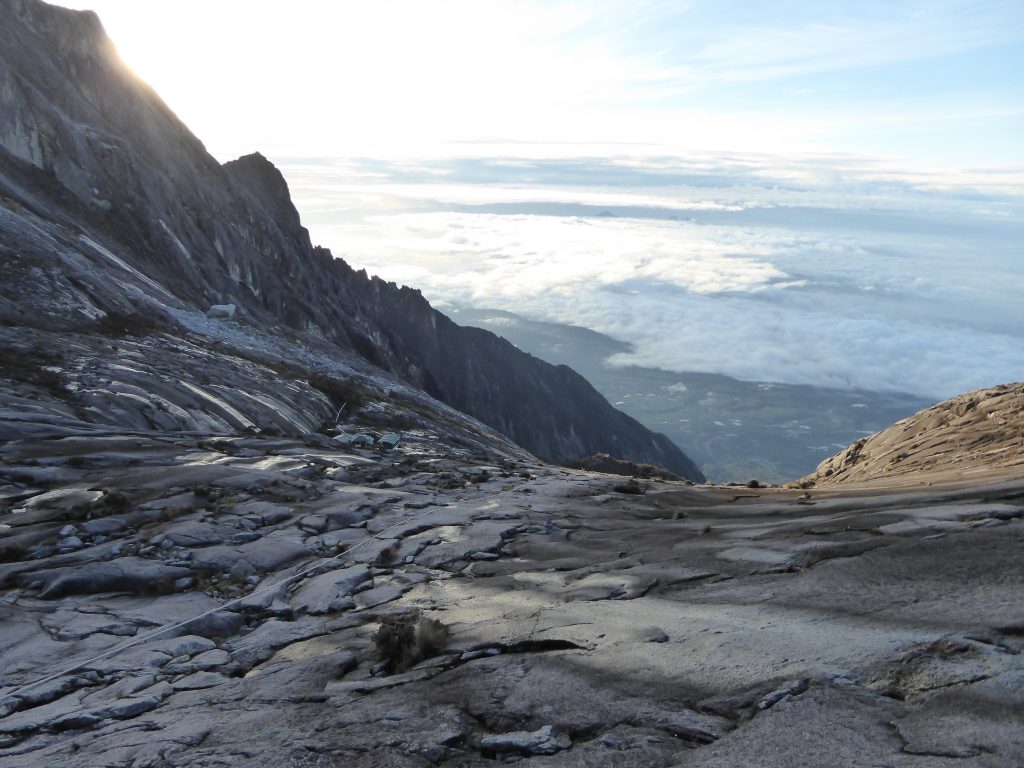
Processes that occur in post-subduction environments – magmatism, exhumation, rapid uplift, and subsidence – remain poorly understood. The relationship between what is observed at the surface and what is happening deeper in the Earth is still unclear. North Borneo provides a unique natural laboratory for investigating post-subduction processes. It was the site of two subduction systems during the last 65Ma. During the post-subduction phase the western side of North Borneo has experienced mountain building, which formed the Crocker Range (~20Ma) and the 4100m high Mt. Kinabalu, a large granite pluton emplaced relatively rapidly between 7.9 and 7.2Ma.
While significant research has taken place to characterize the surface geology of North Borneo, the extent to which this has been shaped by post subduction tectonic processes remains unknown. Indeed, the processes that are occurring are contested: was the intrusion of the Mt Kinabalu granite and subsequent rapid uplift a result of gravitational collapse and extension or has mountain building occurred due to compressive stresses? If gravitational collapse is occurring, what are the causes of this?
To address these questions, a new seismic survey was deployed in March 2018 across the Malaysian state of Sabah, as part of the North Borneo Orogeny Seismic Survey (nBOSS). This is a joint project between the University of Aberdeen, the University of Cambridge and Universiti Malaysia Sabah. The network is deployed in schools, homes, plantations, and conservation areas, and includes one instrument high on Mt Kinabalu. Our network is complemented by data from 24 seismometers operated the Malaysian Metrological Service, many of which are located close to Mt Kinabalu. Such coverage by seismic instrumentation is unprecedented in this region, thus we will be able to provide the first high-resolution constraints on the structure of the crust and mantle in this post-subduction setting. This presentation will discuss the installation of the nBOSS network and present some of the first results to constrain crustal structure in North Borneo using seismic imaging techniques.
Time
(Thursday) 6:30 pm - 8:00 pm